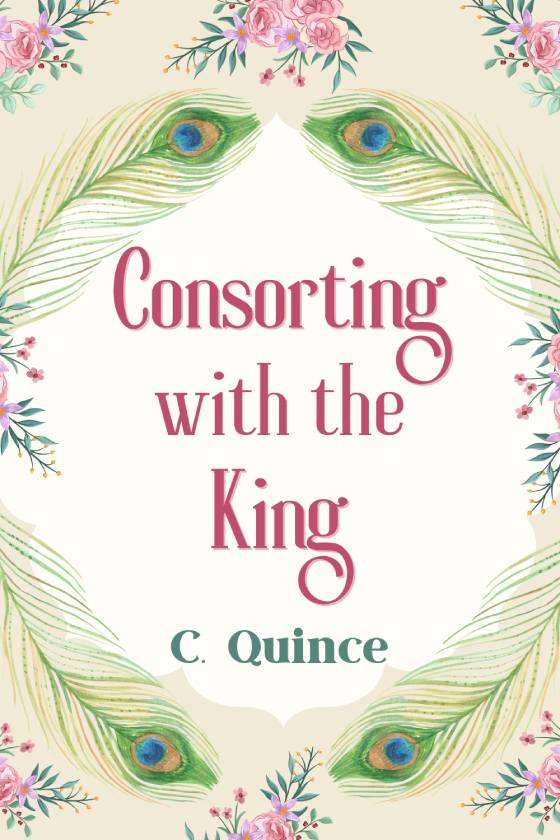
When I’m writing cozy fantasy, I sometimes soften up the edges of what it’s like living with multiple disabilities; I distribute them across more than one character, so that none of my characters have to fight all the fights I face at the same time. Haroun, Shai Madhur, Faraj, Irfan, Priye and Ashar got parts and parcels, but I don’t have a single character who’s paying all the disability taxes at the same time, and I haven’t figured out how to present some of my challenges at all.
Jon Dixon’s The Improbable We Can Do Today doesn’t shy away from any of it. I can’t think of a better book to highlight for Disability Pride Month this year. (I wish I’d met him while the application form for Sheila Jenne’s Disability Pride Sale was still open so I could have pointed him her direction!)

In his newsletter, Jon wrote,
It’s always seemed to me that one of the laziest and most damaging tropes in fiction – not just fantasy fiction but all fiction – is the use of disability as a shorthand for either villainy or victimhood. The number of times someone with a disability is presented as a capable, complex, pro-active protagonist in books or movies or TV shows is vanishingly small. Meriva is my small attempt to help tilt the scales the other way. Her disability is significant enough to be an ever-present reality every second of her day-to-day life, but – I hope – it never ever defines her.
When I started writing Meriva, I made myself one rule: her disability could never be the reason anything good (or bad) happened to her. Nor could it be a lesson for someone else to learn from or be inspired by. And definitely never an obstacle to be triumphed over so the story could reward her with competence. She’s already competent – just differently, and on her own terms.
As a disabled person who wants to read more stories exactly like that? Yes please, more like this!
The Improbable We Can Do Today is a collection of cozy mystery stories across a spectrum of mystery flavors with an indomitable protagonist who’s absolutely going to live her life on her terms. (The rest of the quote is “…The impossible may take slightly longer,” and Jon’s working on a sequel story collection under that title that I am eagerly-and-hopefully-not-too-impatiently wriggling in anticipation of!)
I’m dancing around details to avoid spoilers, but the first story resembles the infrastructure of Murder on the Orient Express, except with a stagecoach and no actual murder; others resemble Leverage style heists or research delves. And I cheered out loud when Meriva’s personal circumstances also made her the exact and only suitable person to fix a problem with a countdown. I love the kinds of tales where your disability isn’t a superpower but it is uniquely valuable to include you and acknowledge what you bring to any situation.
It’s also rare to see a book with a disabled character really grapple with the challenges in managing the balance between independence and caretaking, the way it can impact the dynamics between people, without falling off one side of the ledge (“I’m just a burden”) or the other (“it’s all totally rainbows and roses”). Meriva and Custos have a definite balancing act between them in more ways than one, and yet the book isn’t about disability struggles, it’s about solving crimes! (Along with some delicious detours in not-exactly-coffeeshops along the way.)
Part of my professional training is in accessibility aids, and Meriva’s world isn’t the same as ours, so I kept wanting to reach into the book and ask “hey, Meriva, do service dogs exist? What about a literal dog cart? Magic exists, but it’s definitely got reliability issues, so could you tell me what might be reliable enough so I could take some notes…” But I didn’t want to be That Yoga and Celery Juice Friend, even aside from how I can’t actually chat with a fictional character about the available in-world aids. And Meriva is absolutely competent enough and experienced enough to have figured out what the best available option is for her in her world. Day job overspill met “trust the disabled person about their own needs” there, along with Rule 1 “hold off on the advice until someone actually asks!”
While I can’t chat with Meriva, I’ve been delighted to chat (via email across several time zones) with Jon, who is a stunningly multitalented person! Aside from years in acting and IT and also now independent authordom, I learned that he did all the fantastic art for his books and his advertising himself, as an illustration veteran of TSR and Dragon Magazine. And to top all that off, he’s also an inventive cook!
One of the stories prominently features a bakery with spicecakes and “bittersyrup” (not quite coffee but adjacent, Jon said, noting he had imagined a condensed simmered tree bark that was then reconstituted for drinking). Here’s Jon’s own recipe for the spicecakes.
Florina’s ‘Bluebird’ spicecakes recipe
By Jon Dixon
There are two methods given, using different amounts of yeast. Using less yeast will increase the time needed for the first proving of the dough.
1. To make the dough
You’ll need:
- 11 fl oz / 1½ cups whole milk
- 4 tablespoons / ¼ cup melted butter
- 1½ teaspoons of salt
- 1¼ teaspoons of dried yeast (only ¼ teaspoon if using longer proving time)
- 2 teaspoons vanilla extract
- 3 tablespoons white sugar
- 1 large egg yolk
- 600g bread flour (plus extra for dusting)
Warm the milk and melted butter (1½ mins on high in a microwave).
Add the salt, yeast, sugar, egg yolk and vanilla extract, and mix to combine.
Add the flour and stir until the mixture forms a shaggy ball. Combine the dry flour on the sides of the bowl with the moist flour.
Place the bowl in a warm, draft-free location, cover with a towel, and prove for at least 2½ hours (12-24 hours if using the longer proving time).
2½ (or 12-24) hours later…
Pull and stretch the dough by hand or with a wooden spoon until the dough forms a sticky ball.
Sprinkle the dough with dry flour to make it easier to handle and shape.
Dust the work surface with flour, and roll the dough out of the bowl onto the work surface.
2. To make the spicecakes
You’ll need:
- 65g / ⅓ cup white sugar
- 1 ½ rounded teaspoon of cinnamon
- ½ rounded teaspoon of nutmeg
- ½ rounded teaspoon of ginger
- ¼ rounded teaspoon of cardamon
- Handful of raisins (optional)
- Handful of candied orange and/or lemon peel (optional)
Mix the sugar, cinnamon and other spices together in a bowl and set aside.
Dust the work surface with flour and flatten the dough ball into a strip. Dust it with flour, turn it over, and roll it into a strip about 8”-12” wide and as long as possible (the longer the strip the more of a ‘spiral’ there’ll be in the cakes).
Sprinkle the dough with the sugar, cinnamon and nutmeg mixture and spread it all over the surface with your hand. If you’re using them, sprinkle the raisins and/or candied peel thinly over the surface.
Roll the dough up tightly lengthwise.
Cut the roll into 8 sections and place them cut face down into a round 9” cake pan.
(If you’re using a rectangular 9”x12” pan, make 2 rows of 4 and reduce the baking time to 30 minutes).
Place in a warm, draught-free location, cover with a towel, and prove for at least 30 minutes.
3. To cook
Pre-heat an oven to 180 degrees Celsius/350 degrees Farenheit (160 degrees Celsius/320 degrees Farenheit for a fan oven).
Bake the proved cakes for 35 minutes. They should be cooked through and golden on the outside, but still soft and ‘squidgy’ in the middle.
4. To glaze
You’ll need:
- 400g / 3⅓ cups icing sugar
- 3-4 tablespoons of whole milk
After 35 minutes remove the cakes from the oven and set aside to cool (still in the pan) for about 10 minutes.
Put the sugar into a small bowl. Add 2 tablespoons of the milk and mix to combine. When thoroughly mixed add the rest of the milk slowly until the glaze is thin enough to spread, but not too runny.
If the glaze starts to thicken before you’re ready to spread it add a little more milk and stir to thin.
Spread half the glaze over the cakes while they’re still warm.
5. To serve the finished cakes
To serve, remove the part-cooled cakes from the pan, tear them apart at the edges, and place on a plate. Drizzle them with a little more glaze, and serve them with spiced tea or bittersyrup while still warm. (If you don’t have any brewed bittersyrup available, coffee is a perfectly good substitute!)