Lynn Strong

Cozy fantasy and beyond

Category: Shai Madhur

  • (Part of the recipe collection from Haroun and the Study of Mischief. But since I have a bad time with the “traditional” corned beef, and so do many vegetarians, pescetarians, and migraine-havers, I thought I’d put this out a bit before St. Patrick’s Day for consideration as an alternative. The image of the cook at the cauldrons is from the kitchen of the Golden Temple at Amritsar. And this is the last of my not-yet-posted recipes from Haroun! Up next: Chai and Charmcraft’s recipes.)

    Zirbaj (also seen as zirbaja, with or without an assortment of diacritical marks my eyes are not good enough to distinguish) is the sweet-and-tart-and-rosewater-scented cousin of sikbaj. Sikbaj is almost literally “vinegared stew” and is linguistically and culinarily related to ceviche and escabeche. As ceviche and escabeche’s fish-oriented modern descendants testify, it can be done with fish. Unlike ceviche, sikbaj and zirbaj usually apply heat as well as acid, and the meat can be fish or bird or cow or not even meat at all. Another branch of the sikbaj theory seems to have led toward European blancmange via muhallabiyya and judhab with chicken, rice, milk, sugar, rose water, and almonds. In some parts of Europe its descendants lost its chicken along the way to lean more toward desserts (and the word aspic). In other areas its descendants kept the chicken and rice but lost the milk and sugar.

    We get six and a quarter recipes for zirbaj in The Sultan’s Feast alone. (And that’s without counting the sikbaj variants and the chicken-rice-and-vinegar variants and the vinegar-and-honey stews with different names. I do count the “counterfeit” recipes, because counterfeit basically means vegetarian, but one of those is just a mention that the concept exists, hence the quarter.) I’ve also brought in a zirbaj recipe from The Exile’s Cookbook because it gave more helpful information.

    Where we run into particular headaches are the measurements: most of the recipes don’t give a measurement at all, and the recipes that do give measurements use measurements like a ratl which could be anywhere from 8 ounces to 8 pounds in different places and based on what is being measured, or an uqiyya that could mean about ten times as much in Aleppo as it does in Egypt. (I am actually behind several of the Wikipedia edits trying to figure out what exactly is meant by a ratl or an uqiyya when you’re reading an Egyptian cookbook as opposed to a Baghdadi cookbook, and trying to figure out what to do when you run into the same recipe in both but don’t know where the recipe started.)

    So I’ll give a couple historic recipes and then a rough ballpark for the modern era… “to taste” is going to figure prominently here!

    Historic zirbaj recipes with meat

    (If you’ve made the atraf al-tib spice mix, one of the simpler variations of the seven in The Sultan’s Cookbook uses sesame oil, sweet almond paste, and atraf al-tib in place of the more intricate separate spices.)

    “Take a large plump pullet, slaughter it and do as mentioned above in terms of cleaning it, and so on. Leave it whole and sever its neck. Take the ends of the legs, and push them inside its cavity. Put the bird in a large new pot with salt, sweet olive oil, pepper, coriander seeds, a little cumin and a bit of sliced onion, citron leaves and a sufficient amount of fresh water. Put the pot over a fire to cook and, when it is almost done, colour with a little pounded saffron dissolved in water. Then, pour good vinegar in the pot, as much as you want. Pound four ūqiyas of peeled almonds in a mortar until you get a paste. Check the chicken and, if it is done, add the crushed almonds and stir to dissolve them. Leave the pot on a moderate heat until the almonds have been brought to a boil once or twice. Take good-quality sugar – the same weight as the almonds– and dissolve it in rose water or fresh water. Strain, and pour it into the pot. Taste it and, if you find it too sweet, add vinegar. If it is not sweet enough, add sugar until it is to your liking. Leave the pot on embers to simmer down and to balance the flavours. If you like, you can add split eggs after serving the pullet in a large ceramic bowl. Eat it and enjoy it, Allah the Exalted willing.” (Newman, The Exile’s Cookbook, recipe 195)

    “Cut up meat into small pieces, place in the pot and cover with water. Add pieces of cassia, peeled chickpeas, and a bit of salt. When the water has come to a boil, remove the scum. Add sesame oil and the same quantity of wine vinegar, a quarter of the weight of the vinegar in sugar, and finely pounded peeled almonds soaked in rose water. Add the meat and then ground dried coriander, pepper and ground mastic. For colouring, add saffron. Then put peeled and split almonds on top of the dish and sprinkle a little bit of rose water on them. Rub the sides [of the pot] and leave on the fire until [the dish] simmers down. If you like, you can make it with chicken, in which case take a scalded chicken, and wash and joint it. When the pot is bubbling, throw it in with the meat and cook. If you like the sweetness to be prominent, add some sugar or honey, Allah the Almighty willing.” (Newman, The Sultan’s Feast, recipe 16)

    Dr. Newman has also blogged about a green zirbaj dish he’s prepared that leaves the chicken whole and uses a very herbal sauce. In his sikbaj taste-testing, he’s shredded the meat and vegetables and it’s less green.

    Historic “counterfeit” zirbaj, vegetarian

    Vegetarian recipes are often given as medical treatments in these cookbooks, and the beginning of this one does indicate some humoral theory indications for who might benefit from it.

    (If you’d like for it to be more protein-ful, you could add the chickpeas from the earlier recipe, or your preferred alternative protein source.)

    “Take a few onions, chop them up in the required quantity, throw into a clean pot and place it on over a gentle fire. Add almond oil or fresh sesame oil or good olive oil, depending on the temperaments. Once the onions start to sweat, add a little bit of ground coriander, a little mint, and what is required in terms of spikenard, mastic and cinnamon. Then, add clean vinegar mixed with the required amount of water. Sweeten with sugar and thicken the liquid with smoothly ground peeled almonds. Colour with saffron and rose water. There is no harm in making it with a bit of starch either. [Then,] remove [from the fire].” (Newman, The Sultan’s Feast, recipe 124)

    Zirbaj Remixed

    In the modern era, slow cookers serve much the same purpose as Shai Madhur’s cauldrons, though clearly on a smaller scale. But you can do this on a stovetop too – or over a fire, if the desire takes you.

    • Enough chicken to suit your pot and diners (or swap in some fish or meat or a couple cans’ worth of chickpeas or your chosen protein alternative)
    • A large onion or a couple shallots, peeled and chopped
    • 1/4 – 1/2 cup (to taste) wine vinegar (or cider or white vinegar if you prefer, or verjuice if vinegar doesn’t work for you)
    • 1/4 cup peeled blanched almonds, pounded (or almond flour, or however much almond milk tastes good to you. If almonds are a problem, though, you can use other starches for thickening the stew.)
    • 2-4 Tbsp (to taste) sesame or olive oil, separated
    • 2-4 Tbsp (to taste) sugar (or honey, or date palm syrup aka dibis)
    • 1-2 tsp (or more if you like, to taste) rose water
    • 1-2 cinnamon sticks (or 1 tsp ground cinnamon)
    • 1/2 tsp-ish ground black pepper (or long pepper if you have it), scaled to your meat or meat alternative
    • 1/2 tsp-ish salt likewise
    • (Optional but nice) A good pinch or two of saffron, either rehydrated in water or ground with 1 tsp sugar
    • (Optional) Some atraf al-tib if you made it, in which case you might remove some of the other spices
    • (Optional) 1/4 tsp coriander
    • (Optional) 1/2 tsp cumin
    • (Optional) 1/4 – 1/2 cup dried apricots, dates, or red dates/jujubes, cut small to rehydrate
    • (Optional) Mastic if you have some and know how you like to use it. I haven’t done enough with it myself to advise here, though it was distinctively popular in medieval Egyptian meat dishes.

    Although the directions just say to boil everything, here on this end of time I know how tasty Maillard reactions are. So I’m going to take a page from the vegetarian version’s instructions and interleave it with the meat-containing versions.

    1. If you’re starting with almonds, pound them up (or whizz them in a food processor) and put them in a small container with the rose water to soak while the other ingredients are being prepared.
    2. Either start your saffron soaking in some warm water or grind it in a mortar and pestle with 1 tsp sugar.
    3. In a large skillet, saute the onions in a tablespoon or two of oil.
    4. Chop up your meat and/or chicken. Sprinkle salt and pepper all over it (or your meat alternative). Hold off on the other spices for now.
    5. When the onions are softened, pour the skillet, oil and all, into your eventual cooking pot (whether that’s a crockpot or a stock pot). Return the skillet to the heat.
    6. Add another tablespoon or two of oil to the skillet and brown the salted and peppered meat on all sides. (If you’re using canned chickpeas or another meat alternative, get them warm and toasty.)
    7. Pour this skilletful into your cooking pot too.
    8. Put your cooking pot onto the stove (or turn on your crockpot).
    9. Add enough water to your cooking pot. Bring to a boil. Skim off any scum that floats to the surface.
    10. Once any scum has been skimmed, add your vinegar, sweetener (sugar/honey/dibis), remaining spices (cinnamon/coriander/cumin/atraf al-tib), and/or optional fruit.
    11. At this point everything should be in the pot except the almonds, rose water, and saffron. Those will be the last additions after everything is cooked through.
    12. Cook until the meat is tender and falling apart (or until the meat substitute is suitably tasty). Taste test and adjust the vinegar and/or sweetener as needed; if you’ve added sweet dried fruits, for example, you might not need as much additional sugar.
    13. (Optional) Upaja’s priests would have de-boned the meat and shredded it like a khaytiyya at this point, to make serving a ladle at a time more equitable, but you can either shred it or leave it whole.
    14. When the meat is done and any dried fruits are rehydrated, add in the almonds, rose water, and saffron. Stir through and cook for about 5 more minutes to see whether the almonds thicken the stew to your liking.
    15. If the almond doesn’t thicken it the way you’d like, or if you don’t want to use almonds, you might like to add a slurry of 1/4 cup cold water and 1-2 Tbsp flour or some other starch for additional gravy-making power. Or you can leave it un-gravy-fied too.
    16. Taste test, make any final adjustments to the sweet/sour/salt balance, and serve as desired (with rice, bread, or other tasty side of your liking).
  • (From the recipe collection in Haroun and the Study of Mischief. But also I thought it was hilarious to post the spicy and sour pickle recipe the week after the pink-and-roses recipe and the day after Valentine’s Day, which I also call Discount Chocolate Day.)

    In bookish news, Chai and Charmcraft is now available both for preorder and in ARC copies — here’s the ARC application form, if you’re the kind of person who likes reading and reviewing cozy fantasy with a low-spice MM relationship! And I’ve started a scribbly proto-book page for Katayef and Kittens; everything there is extremely tentative, especially the cover, because I won’t get a chance to work on a final design with Augusta until April. But I need the page link sooner than that for back-of-book blurbs, so here’s a start.

    In the meantime, here are your sour mango pickles for anyone feeling particularly tart about Valentine’s Day!

    Aam ka achaar

    At the present time, the word achaar is used commonly in South Asia for often oil-preserved pickles that are usually fruits and vegetables, though it’s linguistically connected to the Persian word for powdered, vinegared, or brined pickles that could be meat or fish as well as fruits and vegetables.

    Green mangoes have been popular in achaar for over a thousand years now; lotus roots likewise. Ibn Battuta wrote in the 14th century about green mango and ginger pickles preserved in salt being served at the Delhi sultanate.

    In modern South Asian achaar, mustard oil currently seems more commonly associated with that term than vinegar or brine, and you’ll almost always be looking at fruits and vegetables rather than meat or fish when you open a jar or see what the restaurant has dished up.

    If you’d like to make some at home, Kumkum Chatterjee’s quick gur aam achaar (with process photos) on Cookpad shares many flavors with Archana’s long-term preservation aam ka achaar on Cooking with Archana, but Archana’s needs several days to mature and uses more salt for preservation. Dassana Amit of Dassana’s Veg Recipes gives both a traditional version using a ceramic pickle pot and sun-heat and a no-sun-needed variation, at a volume halfway between Kumkum’s and Archana’s. The red chiles listed in all of these recipes are a post-1600s addition, so if you like spice, go for it, and if you’re capsicum averse, you can leave them out and call them extra historic.

    The difference between how long you can plan to keep them comes down to how careful you want to be with sterilization and how much salt and oil you want to use. (For long term preservation, pickles should be salty and sour enough to discourage mold and covered with their liquid in a closed jar – whether that liquid is mustard oil, vinegar, brine, or something else. But I’ll leave it to the chemists to specify exactly how salty and how sour is needed for long-term canning.)

    Note that when they say “raw” mango here, they don’t mean raw ripe mango. They mean raw still-green mango, which can be a challenge to find if you don’t have a South Asian market nearby – but if you want to experiment with the least-ripe mango you can find at your local market, let me know how it goes! If you can’t find a green-enough mango, you can also make pear achaar with firm underripe pears. You can eat the skin of mangoes, but you might or might not want to based on the mango variety and/or the pesticides.

    Quick Low-Spoons Aam ka Achaar

    For no-spoons options, several brands offer jarred achaar online, or you may find them as a side at a nearby restaurant. (My local Nepalese restaurant chops the mango seeds into their achaar, much like bone-in chicken taken apart with a cleaver, so I’ve learned to chew with great caution! Sometimes you’re just not prepared for your pickles to have pickle bones.)

    This is for a small batch, to save spoons between chopping and cleaning; I have half-pint jars that have seen use for everything from spice blends to violet jelly, and lining up a row of small containers means you can fill several and stop when you run out of ingredients.

    • 2 unripe mangoes (or a ripe mango and an unripe pear, or 2 unripe pears), washed, probably peeled, seeded, and cubed
    • A couple knobs of jaggery, or several Tbsp honey
    • 1-2 tsp salt (start with 1, reserve the 2nd for taste test adjustments)
    • 2 tsp vinegar
    • (opt) 1/2 to 2 tsp ground black pepper or long pepper for the pre-1600s heat
    • 1 Tbsp fresh or candied ginger (or if you use powdered, add 1 tsp powdered to the dry masala below)
    • Somewhere up to 2 cups mustard oil depending on how many jars you want to make and cover
    • Clean dry glass or ceramic jar(s) with tight fitting lids

    Dry masala:

    • A couple Tbsp achaar masala or chaat masala (if you have access to a South Asian market)
    • OR a couple Tbsp of the atraf al-tib mixture (if you made it)
    • OR 1 tsp each of as many as you like of turmeric, coriander, cumin, fennel, fenugreek, kalonji, mustard seeds, and powdered ginger if you didn’t have fresh

    Cooking is going to take the place of sun drying and slow fermenting here, to have less fidgety spoon-needing bits.

    1. After cutting up the mangoes and/or pears, rub the salt into them and put them in a strainer to release liquid.
    2. If any of your dry spices are whole, grind them up.
    3. Toast the dry masala in a dry pan until fragrant; tip the spices into a bowl and keep aside.
    4. Heat 1-2 Tbsp mustard oil in the pan and saute the fruit until it begins to soften. If you have fresh or candied ginger, add it here. Taste test for saltiness.
    5. If you have jaggery, add it with a couple tablespoons of water to melt it. Brown sugar or honey will melt on their own. Add vinegar and some pepper and taste test again, adjusting the general sugar/salt/sour/heat balance to your liking.
    6. Cook until the jaggery or honey has become a glaze and the fruit is soft but not disintegrating.
    7. Sprinkle on as much of the dry toasted masala as you like, stirring and tasting as you go. Save any unused masala for your next batch.
    8. When you’re happy with the flavor balance, remove from heat, let cool, and pour into your clean jar(s), smoothing out the surface and covering with mustard oil to keep the air out. Close and refrigerate.

    I recommend refrigerating these and eating within a few weeks because they prioritize quick tastiness over salty fermenting durability. (The higher durability recipes would use a couple tablespoons of salt rather than a couple teaspoons here.)

  • (Part of the recipe collection from Haroun and the Study of Mischief. But also, it seemed like a pink and rose-petaled recipe was quite suited to start off February! And I’ve just opened preorders for Chai and Charmcraft this week; I’ll keep adding links to the page as more distributors come online. I seem to have an accidental Thing about preorders and pickles, remembering the pre-release post for Haroun too…)

    The distinction I make between quick pickles and slow pickles is whether you plan to sterilize things for long term use or whether you’ll eat them within a few days. You’ll also find that distinction noted in the medieval cookbooks – some of them note that they’re meant to be eaten after two or three days, and others say they’ll be good for a year (assuming appropriate cleanliness and saltiness in the making, of course).

    For all that turnips have an unfortunate reputation for being bland and unpleasant, that made them a marvelous candidate for medieval pickling. In the table of contents of Nawal Nasrallah’s translation of Kanz al-Fawaid / Treasure Trove of Benefits and Variety at the Table, there’s over twenty recipes for pickling turnips alone. The Sultan’s Feast by Ibn Mubarak Shah, translated by Daniel Newman, offers many pickling recipes as well. (It’s a condensed version of Kanz al-Fawaid, but it’s available in an ebook, which means it’s more accessible to me; I’ve worked back and forth between the two.)

    Among just the turnip pickles alone, you get salted brines, vinegared brines with and without sugar, saffron for dyeing the pickles yellow, and yeasted brines. Like an upscale market’s olive bar, the cooks also took already-cured olives and applied new flavors to them: walnuts, hazelnuts, coriander seeds, salt preserved lemons, and olive oil, smoked olives, and so forth.

    Some of the recipes include instructions for scenting or smoking the jar they’re to be preserved in. And rose petal pickles are particularly fragrant.

    Sweet and Sour Rose Petals with a Low Spoons variant

    Recipe 609 in Nasrallah’s Treasure Trove either has three sub-variants under the same number, or this one might have been meant to be 611 but it just wasn’t numbered? I can’t tell for certain because of the clipping in the Google Scholar preview. I’m clearly going to have to try this with my damask roses this summer. And I was delighted that this historic recipe also contained a Low Spoons variation built into it!

    “Another recipe [for sweet and sour rose petals]:

    Take [the petals of] white roses of Nusaybin, put them in honey, and leave them in the sun until they wilt. Fold wine vinegar and a bit of mint into them, and put them [in a jar], and use [as needed].

    Those who do not have fresh roses can take ready-made rose-petal honey jam and add vinegar to it. If it turns out to be too sour, sweeten it [with sugar or honey]. This will be as fine as the first one mentioned. It will look nice, and it is quite easy to make.” (Nasrallah’s Treasure Trove / Kanz translation, somewhere between recipe 609 and 611)

    My modern note: You can find gulkand or Yunnan rose petal honey jam online if you’d like.

  • (Part of the recipe collection from Haroun and the Study of Mischief.)

    There are two versions of qanbaris in The Sultan’s Feast, one of which is made like paneer with acid and the other of which is made like dahi with hung yogurt. Both of these varieties of cheese are among the easiest cheeses to make at home, because unlike halum/halloumi and cheddar and others, you don’t need rennet and you don’t need aging. (In fact, paneer is so easy to make at home that I have accidentally made Earl Grey paneer in a teacup before.)

    Historic qanbaris with Boiling Acid, Ranveer-style: Mad Alchemist’s Cheese

    This historic recipe feels like one of Ranveer’s alchemy experiments: they’re taking the “throw a stick of dynamite in, shut the blast door, and run away” approach to making absolutely sure there’s enough acid to curdle the milk. Instead of boiling milk and adding a couple tablespoons of vinegar, this one boils a whole pot of vinegar and adds the milk. I love the original scribe’s commentary on people who think cheese is an essential food group too:

    “Take new pots, pour in tart vinegar, and place over a fire until it starts boiling. [When it does,] remove from the fire and pour in milk. Set [the pots] aside and do not touch them. In the morning open them up, and you will find that [the milk] has coagulated into qanbarīs. Milk has harmful properties, but these are outweighed by its benefits; it is tasty and there are people who do not enjoy their food unless there is cheese on the table.” (The Sultan’s Feast recipe 182)

    Paneer with So Much Less Boiling Acid

    I suspect part of the reason for the “boil all the vinegar, throw milk in, clamp the lid on, run away, and see what’s happened by the next day” tactic comes from the unpredictability of homebrewed vinegar acidity levels. Nowadays you can buy industrialized vinegar standardized to particular strengths; 5% is the minimum for preservational pickling, and Essig-Essenz comes in at 25% in the bottle (along with a hazard warning not to drink it undiluted). I’ve seen paneer made with both vinegar and lemon juice, and the lemon juice recipes also tend to have “keep some spare juice on hand” notes as well.

    One of the unique features of cheese made with this acid method is that, like halloumi, it won’t melt. If you drain it well and shape it solidly, you can grill paneer just like kebabs. It’s more likely to crumble than to melt, so cubes in curry are a classic for a reason.

    • 2 quarts or thereabouts animal milk (cow, goat, whatever)
    • Up to 1/2 cup vinegar and/or lemon juice
    • A sieve or colander
    • Cheesecloth, muslin, or a flour-sack kitchen towel (smooth and densely woven) – I honestly prefer muslin or the flour-sack towel here because the “cheesecloth” I have is too loosely woven and shaggy

    Line your sieve or colander with your cheese-making cloth (and if it’s actual cheesecloth you probably want a couple layers).

    Pre-measure your acid into a pourable container.

    Bring the milk up to a boil, stirring constantly to keep it from scorching or scorching.

    Pour a couple tablespoons of acid into the hot milk. If you don’t see it begin to separate out into clumpy curds and pale whey, add some more acid.

    When your curds and whey have separated in your pot, take the pot off the heat and carefully pour it through your cloth-lined sieve or colander.

    Gather up the ends of the cloth and twist carefully to wring more of the liquid out of the cheese and encourage it to form a ball.

    Some people will tie a knot in their cloth and hang it over their faucet to drip. My faucet is too curvy for that, so I put the colander into a large bowl and let it continue to drip.

    If you’d like for it to be really solid, you can put a plate with a can on top of it in the colander and bowl arrangement to press additional liquid out. You can also put the weighted plate and colander and bowl arrangement into the refrigerator to continue draining and firming up overnight.

    Accidental Earl Grey Paneer

    Believe it or not, some people have done this on purpose, and Earl Grey cheese is surprisingly expensive.

    • 2 cups milk
    • 1-2 double bergamot Earl Grey tea bags or 2 tsp loose leaves in a tea ball
    • 2 oz lavender syrup that happens to be preserved with citric acid (though you could produce the same effect with lemon juice)
    • Colander and cloth apparatus from above

    Simmer the tea directly in the milk until it’s tan and fragrant.

    Assuming you’re more prepared for this outcome than I was, remove the tea containment system from the simmering milk before adding the acid.

    Add the lavender syrup and/or lemon juice.

    Stir until you have curds.

    Pour through cloth and colander.

    Wring and squeeze gently, unwrap your tea flavored cheese, and nibble.

    Historic qanbaris with hung yogurt

    I suspect the hung yogurt qanbaris is the variety that Treasure Trove recipe 529 recommends flavoring with the oil-based za’atar-meets-pesto paste, rather than the “throw milk into the boiling acid and run away” qanbaris. It seems easier to get flavorings into a softer cheese, as opposed to marinading and brining harder / crumblier cheeses. But this recipe is basically identical to the modern methods of making yogurt and yogurt cheese, aside from the historical measurements:

    “Take milk and boil it until it starts bubbling. Then take a new pot and leave it to cool for an hour. Then take laban yāghurt – for each ten raṭls of milk, take half a raṭl of laban yāghurt, and stir with a ladle. Cover the pot and leave in a warm place. Put a little bit of straw underneath and leave overnight, and it will become like a disc. Put [the yoghurt] in a bag, and strain, after which it will become qanbarīs. Remove it from the bag, add salt, and serve when you need to. Afterwards transfer to a clean container [for storage].” (The Sultan’s Feast recipe 189)

    What’s a ratl, you say? That’s an excellent question and the answer can range anywhere from eight ounces to eight pounds depending on what you’re measuring and what city you’re in when you do it. For these purposes, just pick a volume that suits your heating container – maybe a half-cup or a cup, if you’re planning to use a slow cooker for your low and steady heat source.

    Dahi and other hung yogurt cheese variations

    Dassana’s Veg Recipes has a dahi recipe that’s strikingly similar to the historic version above. It does require animal milk, though, and if you have food sensitivities, you might need to use a different yogurt variety.

    All the cheese-making magic here is mechanical, not fermentational, and you could do something similar with cashew or coconut or other non-dairy yogurts.

    Still got that colander and cloth arrangement from paneer above? That’s it, really.

    • Some quantity of yogurt (animal or plant) that you’d like to make thicker
    • Cheesecloth, muslin, or flour-sack towel
    • Sieve or strainer
    • Optional: Flavorings of your choice

    If you’d like to flavor the yogurt before condensing it into cheese, stir it in and leave it in the refrigerator overnight before continuing.

    (Extra history points: Stir in some of the fresh thyme and oil-based za’atar blend. Low spoons modifier: Use dried za’atar or pop open a small jar of pesto and add a couple spoonfuls.)

    Set up your cloth and sieve or strainer arrangement.

    Soft cheese: Let it hang out in your colander (and/or hang the cloth from your sink faucet if your faucet is cooperatively shaped).

    Medium firm cheese: Tie up your curd, put the plate and/or rock on it, and put it in the refrigerator overnight to see how much more you could press out of it. (Okay don’t just put a rock on it, that would sink in, the rock is an optional addition to the plate!)

  • (from the recipe collection in Haroun and the Study of Mischief)

    The spice mixes in this collection also make delicious additions to cheese. You could stir atraf al-tib into a drained Greek yogurt or sprinkle za’atar into the makings of qanbaris or dahi. Mozzarella balls or paneer or halloumi chunks rolled in za’atar and served with flatbread and olives are also delicious and easy.

    If you want non-dairy cheese, Sam Turnbull has a highly-rated 15-minute soft cashew cheese recipe at It Doesn’t Taste Like Chicken, and one of her recommended spice blends is very like za’atar. With a bit of honey and atraf al-tib, this could make a fascinating cousin to honey cinnamon cashew spreads too.

    If you want a firmer vegan cheese or are sensitive to cashews, Ela from Ela Vegan has a highly-rated sliceable nut-free vegan cheese recipe with a suggested spice blend that you could either add to or substitute za’atar for.

    Halum and Halloumi

    While Cyprus has laid legal claim to what’s modernly known as halloumi cheese, which is firm and grillable, the word halum / haloum was also used for cheese in medieval Egypt. Both Treasure Trove and The Sultan’s Feast give a recipe for flavoring halum with thyme and citrus, and since the recipe describes layering the cheese with citrus leaves and thyme, I imagine it must have been firm enough to handle as objects.

    If you’d like to make your own halloumi to start with, Matthew Evans gives a recipe involving rennet (also known as junket) at SBS Food. If you’re vegetarian, check the source of your rennet. But the historic recipe below assumes you’ve already got some cheese to flavor, so I’m going to start there.

    Historic halum flavoring

    “Boil milk with salt and Syrian thyme until one third of it has evaporated. Remove from the fire, and let it cool. In a silk cloth add a little bit of ground soapwort with cheese in the jar, together with a bit of (sour) orange, kabbād citrus, citron, lemon, and fresh thyme. Put one layer of cheese, one layer of fresh (orange) leaves and thyme until the jar is filled up. Then, add the boiled milk until it fills up the jar, and seal [the top] with a bit of good quality olive oil, and store. Transfer to a container when needed.” (Newman, The Sultan’s Feast recipe 186)

    I’m supposing that low-bacteria milk of the general thickness of cottage cheese liquid is probably what they were aiming for with the milk cooking, with some extra flavors added along the way.

    My easier modern version of flavored halum

    If you have the ambition and the organically grown citrus tree access to try layering cheese with citrus leaves, I’ll cheer you on. I don’t have either of those, though.

    (Quantities? Honestly, whatever suits your ambition and a reasonable sized container.)

    • Firm but not dry cheese (halloumi, paneer, mozzarella, drained cottage cheese: yes; parmesan, romano, cream cheese: probably not; hung yogurt cheese: maybe)
    • Some zestable citrus fruit, preferably organic: lemon, citron, lime
      • (You probably don’t want to use the citrus juice itself, or the milk you’re covering it with may become additional cheese)
    • Fresh thyme and/or oregano (if you want to use za’atar here I’ll endorse it, just be careful with how much sumac is involved, because malic acid also makes milk into cheese)
    • Pinch of salt
    • Pasteurized milk (or the liquid from your drained cottage cheese) to suit the size of your jar

    If you want to simmer the milk to condense it by a third and flavor it with herbs, go for it. If not, pasteurized milk is helpful for crowding out air pockets in the container.

    If your cheese is one large object, cut it into some smaller objects so the flavoring can distribute more.

    Mix your citrus zest and your herbs with your cheese chunks in a bowl.

    Pack them into a jar, cover with milk (or your reserved cottage cheese liquid), and refrigerate overnight.

    Eat within a few days.

    Vegan version:

    Use the vegan cheese of your choice and cover with almond or coconut milk or olive oil.

    Lowest spoons version:

    Stir whatever non-acidic flavorings you like into a container of cottage cheese. Refrigerate overnight. Nom the next day.

  • (Part of the recipe collection from Haroun and the Study of Mischief)

    Za’atar can mean Syrian thyme / Origanum syriacum by itself, but it’s also meant thyme-based spice blends from the Middle Ages until today.

    In Nasrallah’s Treasure Trove recipes 529-33, the za’atar blend she describes is used for flavoring cheese and involves moldy bread in the mixture. My modern soul quails at the notion of experimenting with homegrown bread molds, so I’m not going to recommend that particular method. But thyme and mint are stirred into soft qanbaris cheese in recipe 529, and used in the making of a milk-based condiment in 530. (I can’t see the exact details because of the Google Scholar cut-offs. At this point, imagine here my standard rant about having a library-available print copy less than a mile from my house that I can’t read, and let’s move on.)

    Daniel Newman notes that The Sultan’s Feast 190 is comparable to Treasure Trove 533, and his version reads:

    “190. Recipe to make thyme. (Take thyme) [and] clean its leaves. Wash and rub with salt and squeeze [the juice out. Then add] good quality olive oil on top; for each ten raṭls [of thyme], take one raṭl of olive oil. Place in an oiled wide-mouthed clay jar and seal. Add ground salt and if you want to season it, [add] pounded peeled garlic, a little bit of salt and good-quality oil until it becomes like ointment. Add pounded walnuts and eat; it is extremely tasty.”

    The English rendition of “to make thyme” sounds as though the word za’atar is already beginning to be used to mean a seasoning beyond the plant itself, though this particular recipe reads more like a thyme-based pesto (with oil, garlic, and walnuts) than the modern definition of za’atar.

    The modern definition of za’atar as a spice blend involves some combination of dried thyme, dried sumac, sesame seeds, and occasionally other flavor notes as desired. Penzey’s sells a sumac-rich blend that is absurdly tasty when sprinkled on hummus or pizza.

    Historic za’atar, oil-based:

    • 1 – 2 cups fresh thyme leaves, washed, dried, and removed from the stems
    • 1/3 cup chopped walnuts (or another nut or seed if you’re allergic)
    • 2-4 cloves fresh smashed garlic (but if you want more I’m not going to tell you no)
    • Up to 1/2 cup olive oil, cold pressed if available, separated
    • Pinch of salt

    If you want the historic experience, mash up the thyme, garlic, and salt with a couple tablespoons of olive oil in a mortar and pestle. (The rest of the oil is for covering the surface in the jar(s).)

    If you have a food processor, use it without shame.

    Once you’ve made your thyme puree, put it in a jar and cover the surface with olive oil before closing. Use within a few days, if you can resist that long.

    Modern za’atar, dry spices:

    (These dry spices are sometimes mixed in with olive oil as in the manakish recipe below, but they aren’t stored that way.)

    • 2 Tbsp dried thyme
    • 2 Tbsp sesame seeds
    • 1-2 Tbsp sumac depending on how tart you like it
    • Optional: Additional flavor notes like oregano or marjoram
    • Optional: a sprinkle of salt
    • Lightly toast the ingredients in a dry pan until fragrant. Let cool and put in a jar with a tight fitting lid.

    You can sprinkle it on things as it is or blend with some olive oil for a tasty dip or spread.

    Little dipping bowls (like for soy sauce with sushi) are handy for dipping bread into za’atar-mixed olive oil. (They’re also handy for portion control, because I will devour za’atar-and-olive-oil-dipped bread with far too much enthusiasm.)

    Manakish

    • Flatbread, naan, or pita
    • Either start with historic za’atar with oil blended in, or mix a couple tablespoons of olive oil with enough dry za’atar to make a paste
    • Optional: Feta or mozzarella or cheese of your choice

    Spread your bread with a thick layer of oil and za’atar. Optionally top with cheese. Toast or grill. Nom.

    • If you’re feeling super ambitious you can start from the dough onwards. I haven’t had that many spoons in the drawer since 2019 myself, though.
    • Low spoons modifier: Order something like breadsticks or a cheese pizza. Spread or sprinkle your preferred za’atar liberally over the top. Nom.
    • Low dairy modifier: Za’atar is also delicious on pita and hummus. Honestly za’atar is delicious on almost anything savory. I’ve put it on onigiri when I was out of furikake.
  • (Part of the recipe collection in Haroun and the Study of Mischief)

    The dividing line between food, perfume, and incense was much blurrier in the medieval Middle East than it is in many places today; you can find recipes for breath mints that can also be burned as incense, or for spice blends that also appear in hand washing powders.

    Atraf al-tib takes a similar role to garam masala in that everyone has their own blend and it was commonly sold by vendors. In Charles Perry’s Scents and Flavors, he notes, “The name aṭrāf al-ṭib, ‘sides of scent,’ referred to the paper packets in which the spices were sold in markets. A maximum recipe is spelled out in Chapter 4 but not all the spices listed there were obligatory; the aṭrāf al-ṭib in §2.14 are merely ginger, cardamom, and a bit of clove.” That’s quite similar to European poudre douce, a sweet spice blend which is also one of the precursors of pumpkin spice.

    The recipe he gives in chapter 4 lists ingredients but not proportions: “Since ‘mixed spices’ are repeatedly mentioned in this book, a detailed description is in order. They comprise a mixture of spikenard, betel nut, bay leaf, nutmeg, mace, cardamom, clove, rose hips, ash tree fruits, long pepper, ginger, and black pepper, all pounded separately.” (Scents and Flavors recipe 4.4)

    In the introduction to The Sultan’s Feast, Daniel Newman writes that aṭrāf al-ṭīb “is used in about ten per cent of dishes, often alongside mint, rue or saffron. It is not usually called for in meat or fish dishes; instead, it is found in beverages, sweets, pickles and fragrances.” (It is, however, called for in one of the six and a quarter zirbaj variations in the book!)

    Based on the notes that there are some simple core ingredients and you can add more of them as your spice cabinet allows, this recipe is like Ashar’s rose-scented chai in that I’ll list some essentials and some optional stretch goals.

    The core notes:

    • 1 part ginger (powdered, not fresh or candied)
    • 1/2 to 1 part cardamom
    • 1/8 to 1/4 part clove

    Optional additions as you like:

    • 1 to 2 parts dried rose petals depending on how fragrant they are
    • 1/4 part nutmeg and/or mace
    • 1/4 to 1/2 part long pepper and/or black pepper
    • Bay leaves to taste (either left whole in the jar to remove from the cooking later or thoroughly powdered to blend in)

    A challenge, and possibly not advisable in the modern world:

    • Betel nut is not available in many locations because of concerns about potentially hazardous compounds.
    • Spikenard seems to be more available as an essential oil than as a powder, and the rest of these ingredients are dry.
    • For many years and many translations of cookbooks, some folks weren’t even sure what lisān ʿuṣfūr was. Perry and Newman’s “ash tree fruit” should be taken in the context that Old World and New World varieties of ash trees are different. Ash tree fruits (long and green) are not the same as mountain ash/rowan fruits (small, round, and red). And, of course, the emerald ash tree borer means that ash trees are very endangered.

    If you blend some of this up and store it in a well-sealing jar, you can try it out in some of the cheese and/or pickle recipes below. (Or the zirbaj!)

  • This was the second roughest holiday season of my life, and my plans for 3 weeks mostly of writing and editing… the universe said Ha, and kept laughing. I’m… probably not okay. But I need to keep impersonating it, because there isn’t a good alternative. When you grow up undiagnosed autistic with complex trauma and then become a theater major on top of that, are some things you learn about the functional value of masks that keep you together somehow when the show absolutely has to go on.

    I also realized that I made fundamental mistakes trusting WordPress’s defaults 3 years ago. But the amount of time and work needed to correct them is time that won’t go into writing new books.

    So here’s my patch between what I didn’t know about WordPress three years ago and what I can hopefully sustain going forward: the new Recipes section, collected by book, which I hope to add to gradually, reusing content that’s already written in the books and cutting down on the volume of paper needed in paperback editions. (If only in focus photos were not my nemesis!)

    Chai and Cat-tales has the least-intimidating collection of gaps to fill, so I’m going to start there.

    And, really, I’m willing to bet a fair number of folks are in need of some warm and soothing comfort lately.

    Golden Milk and Golden Chai

    Haldi doodh, turmeric milk, is an ancient drink from India. I can’t give you anything resembling a date, though. Every reference I’ve found has said Ayurvedic medicine has used it for “thousands” of years, and while I wouldn’t be surprised to learn it’s in the Manasollasa or Lokopakara manuscripts, I don’t have legible access to either of them.

    So in this case I’m blending history with a twist of modern knowledge: cucurmin’s bioavailability goes up dramatically in the presence of pepper and fat, and cinnamon and ginger and many other spices are potent anti-inflammatories (as well as being delicious). And if you’re adding chai masala as well, the difference between golden milk and golden chai comes down to whether you also simmer in some tea.

    The resemblance between dry chai masala, medieval poudre douce, and pumpkin spice is striking. I have a whole rant about the historical intersections between pumpkin pie spice and chai masala and poudre douce, with tangents through “things women are regularly mocked for enjoying, with or without pepper,” “things megacorporations time-limit and access-control,” and “things I want to enable more people to enjoy for themselves whether or not it is corporate-and-or-patriarchy-approved.” But that rant is not so cozy!

    Personally, it took me a while to warm up to turmeric drinks. In my quest for inflammatory symptom relief that wasn’t NSAIDs, most of the turmeric tisanes I’d tried tasted like I was licking my ochre art pigments. But once I found a concentration I liked, it got easier. And also tastier. 

    I’ve seen modern recipes going from “a pinch” to “a tablespoon” (!) of turmeric per cup of milk. My own balance point hits around a quarter to half teaspoon in my big 24 ounce mug, because on bad days I want to just make it once and sip on it for hours. 

    On a bad day, I’m also not going to be up for freshly hand grinding every spice. So I pregrind my chai masala. Then I use about ½ tsp chai masala to ¼ tsp turmeric, or sometimes half and half when I need extra ouch-fighting power.

    If you’re fond of skim milk or you’re using a fat free nut milk, you’ll likely want to either add a bit of coconut oil to the hot liquid or sip a spoonful of olive oil on the side. 

    I know some people enjoy “bulletproof coffee” with butter in it. And I’ve made and drunk Tibetan tea with butter and salt. But both of those strike my own taste buds as “We’ve crossed the beverage-versus-soup threshold here.” So I don’t suggest blending olive oil into your turmeric and milk, or you may find yourself wondering where the rest of your dal makhani ingredients are.

    Some useful dry chai masala / poudre douce variants 

    Easy mode: Get something already fine ground like pumpkin spice and add extra cardamom and black pepper.

    Easier mode: Use something like the Blue Lotus chai powder mentioned below, though it includes powdered tea so you will get some caffeine.

    Handcrafted for storage:

    • A couple dozen green cardamom pods, cracked and with the black seeds crushed. (Or 1 Tbsp powdered)
    • 3-4 cinnamon sticks, preferably Ceylon cinnamon, bashed up enough to fit in a spice grinder. (Or ½ Tbsp powdered) 
    • 1-2 tsp black peppercorns (or long pepper if you can find it)
    • 1-2 tsp dried ginger (not crystallized or fresh here; powder keeps longer)
    • ¼ to ½ tsp nutmeg, ideally fresh grated
    • If you can find them:
      • ½ tsp grains of paradise
      • A couple chunks of galangal
      • ½ tsp mace

    If they’re already powdered, mix them up.

    If they’re still whole, grind them all up together. 

    If you enjoy the brewing process, it doesn’t need to be ground too fine. 

    If you don’t want to have to strain it, make sure to remove the green hulls from the cardamom pods and extract the seeds before grinding. Then grind all the spices as finely as possible.

    Put the ground spices in an airtight jar and date it so you know how fresh it is. (Best within a few months; it won’t go off, it just won’t be as fragrant or as potent.)

    When you’re ready to drink:
    • 1 or 2 cups hot milk from cows or plants
      • (If skim, add a bit of coconut oil or a sliver of unsalted butter) 
      • (If you want it to be chai rather than hot milk, simmer some CTC black tea like PG Tips or Jivraj in there too)
    • ¼ to ½ tsp turmeric (to taste)
    • ¼ to ½  tsp chai masala / poudre douce above, OR pumpkin spice plus cardamom and pepper (to taste) 
    • 1 to 2 tsp honey, jaggery, or sugar (to taste)

    Simmer for 15 minutes or so, strain if needed, and serve warm.

    Scale up or down based on the size of your mug.

    Ready to drink easy mode: 

    When I’m having a bad day, my super-fast, get-it-done, not-sure-I-won’t-burn-the-milk-today version goes:

    • 1 or 2 cups hot water (not boiling)
    • ¼ to ½ tsp turmeric (to taste)
    • Half a container of Orgain’s vegan vanilla meal shake (brings enough fat for bioavailability, a lot of creaminess, a lot of vitamins, and enough sugar that I don’t add more)
    • Your chai masala / poudre douce equivalent of choice:
      • ¼ tsp your home blend, if you ground it finely enough not to need to strain it
        OR
      • ¼ tsp something like Blue Lotus original chai masala per cup
        OR
      • ¼ tsp pumpkin spice plus ⅛ tsp cardamom and several grinds of pepper per cup

    If I’m out of meal shakes I swap in 1 Tbsp milk powder and 1 tsp sugar per cup.

  • Whew.

    (If you’re feeling overwhelmed by the Big Parties this time of year, you’re not alone. Here’s a very Small Party for whatever level of ambition you feel like.)

    I’m both delighted by Chai and Cat-tales and also exhausted before the marathon even properly starts.

    I severely underestimated how much small business bureaucracy, research, form filling, and other administration would be involved in not just publishing a book but in fighting my way through at least a dozen sets of “yes this is actually me” autoresponse systems when trying to claim an author identity with a common name. I have not conquered all the paperwork, but I have gotten the essentials through.

    So, it’s available now!

    I am slowly assembling the trappings of a small business professional, also known as social media presence, a contact form, a newsletter, and a wide array of advertising venues that want me to pay them exponentially more money than I have taken in at this point, which, hahahaha oops.

    Someday I’m going to need to break the habit of feeling like I need to post a recipe with every blog post! But that day is apparently not today, because I would also like to squee about how much fun I had making the chapter art for Chai and Cat-tales.

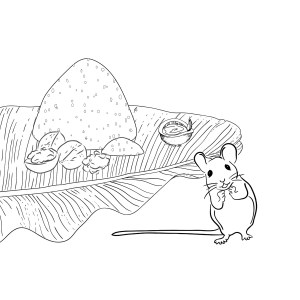
    ETA, I also just found the chef Shai Madhur needs to hire for his tiny mouse festivals. Tiny katori and kadai and thali! Tiny charcoal cook stove! Tiniest fryer for papad and puri! Approximately one tablespoon of dal and a spice container the size of a pillbox.

    I am very weak to tiny adorable things…

    https://m.youtube.com/watch?v=uZUiFadIWCI

    Since I can’t see well enough to use a pencil anymore, and since the thought of AI art or writing makes my soul break out in hives, my on best bet for art is what I can remember of Photoshop from about 25 years ago, plus a Depositphotos standard license for art that authors and creators are allowed to remix and use professionally. This particular image came from assembling about 5-6 pieces of licensed stock line art over several hours of squinting at previews and careful composite editing.

    A delighted mouse squeaks with enthusiasm for Shai Madhur's mouse-sized feast of rice and treats on a banana leaf with a little walnut shell diya lamp burning.

    In “The Potter’s Dream,” one of the three novellas in Chai and Cat-tales, Shai Madhur is tasked with trying to keep the mice out of the grain, and despite the fact that he lives in the Temple of Bastet, he’s just not good at un-welcoming anything, even the mice. So he prayed over a festival meal for the mice and made a little mandala of grain and pigments to see where they went afterwards.

    The mice, of course, very helpfully left brightly pigment-colored footprints all over the grain sacks once they’d finished receiving his blessings and his festival meal.

    In a different fantasy, the mice would have been obediently willing to go the other direction. But I’ve had a few too many difficulties convincing mice that no they really did not want to be in a house with both me and a cat who grew up wild and still had no qualms at all about mouse-hunting.

    (I had qualms about his mouse-hunting. For many years my cat seemed determined to repeatedly and not-very-patiently teach me, his clearly hunting-impaired provider of dry crunchy cat food, what was necessary to do to turn mice into juicy tasty food. The mice were persistently stupid enough to keep providing my mighty little hunter with educational materials for his hunt-reluctant human.)

    My mighty hunter has since crossed over to hunt the mice in kitty heaven. But I’m still as little inclined as Shai Madhur to hurt the mice myself. (And I adore that mouse in the art beyond all reason.)

    So I’m crossing a couple streams here with the intersection of Japanese furikake and onigiri and Middle Eastern za’atar, because I think the temple mice would approve.

    The Mouse’s Festival

    • Either 3/4 to 1 1/2 cups (1 or 2 rice cooker portions) of uncooked rice, or leftover rice from takeout
    • Shai Nanda’s lemon-rubbed cheese, if she will give you the recipe, or some feta sprinkled with olive oil and lemon juice
    • Any additional protein of your choice (beef, chicken, falafel…)
    • Your choice of any convenient and tasty mezze: hummus, baba ghanoush, tabbouli, dal, olives, dates, dolma, whatever you enjoy
    • Your choice of za’atar, furikake, or mixed herbs
      • If you don’t have pre-made za’atar at hand, but you do have sumac, thyme, oregano, and sesame seeds: Mixing about 1 Tbsp of each of them together and toasting them for a couple minutes in a warm dry pan, then adding a sprinkle of salt, gets you za’atar. But Penzey’s za’atar is also tasty and I like supporting the Resistance.

    Rice:

    • If you want to shape your sushi rice, you’ll want to cook short grain sushi rice fresh. It will hold together in filled balls with ingredients tucked in the middle and/or sprinkles on the outside.
    • If you don’t care about shaping it, you can use long grain jasmine or basmati, or anything leftover from takeout.

    Other ingredients:

    • If you have finger bowls or katori from thali or other cute small containers, plate up your protein and mezze with them. If not, you could use lettuce leaves or nori squares or just dot them wherever you like.

    Time to eat:

    • If you have a banana leaf, set it out.
    • If you don’t, get a fancy plate or bamboo mat or something that makes you feel festive. Small bowls are fun and mouse-friendly too.
    • If you like rice balls filled with tasty stuff, take fresh-cooked sushi rice and tuck your protein in the middle and shape it. (If your hands are heat sensitive, you can get an assist from a quick swipe of olive oil in a teacup, then use the teacup as a mold. If you feel particularly festive, you could use silicone muffin molds or even flowers.)
    • If shaping rice balls is too much fuss, cook or reheat whatever rice you’ve got. You can entertain your inner mouse with teacups of rice covered with assorted nibbles and sprinkles with less hand scorching.
    • Sprinkle your za’atar or furikake on your rice and anything it looks tasty with, for a nod toward the mouse dance party.

    Other delicious stuff to do with za’atar:

    • Sprinkle on Greek yogurt for quick simple and tasty veggie or bread dips
    • Blend with olive oil and toast on pita or saj
    • Sprinkle on pizza (especially when there are olives and grilled onions involved)