Consorting with the King and the history of lemonade

I know I write in a niche; I started writing my books because I wanted to read books like them and couldn’t find them in a language I’m fluent enough in.

So you could have knocked me over with one of the peacock feathers on this book’s cover when I ran into:

🤴🏽A kind, soft, middle-aged Middle Eastern gentleman who…

🫖 …loves his home’s food and culture and architecture and definitely the chai…

🧸 …and needs a break from all the obligations and expectations and thou-shalts in his life…

🐈 …and adores the thousand cats who wander around his city.

🚋 (So much that he made them a little solar powered cat tram!)

Up til that last bit there, I might have been talking about Chai and Charmcraft, but I am utterly beyond delighted by C. Quince’s Consorting with the King.
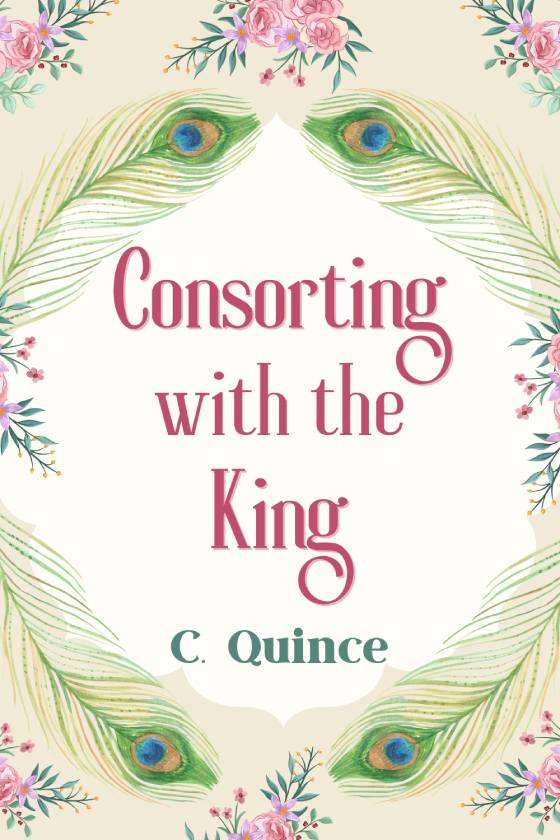
Consorting with the King by C. Quince

C. Quince’s solar-powered not-exactly-gaslamp edition of something adjacent to the Ottoman Empire is gently and cozily flipping the usual tropes all the way through, and I am so here for it. Instead of the white folks bringing Enlightenmnent to the brown folks, it’s clear early on that Istanbul is an old and beautiful and rich civilization even before the solar power comes onto the scene. The Western visitors have a lot of catching up to do (one of them nearly drinks out of the hand-washing bowl). The Turkish royals are better educated; they speak the handwaved-not-exactly-Saxon-that-gets-rendered-in-English with a bit of hesitation but still more fluently than the Saxon-and-Victorian-coded point of view character speaks Turkish.

And then there are the cats. And the little solar powered cat tram. And the Cinderella-inverted setup that absolutely won my heart — I can’t say more without spoilers. I knew where it was going but I didn’t mind knowing that because the ride itself was as delightful as the cat tram.

I might possibly have made an idiot of myself squeaking incoherently in his email about how madly I love this book, but I am not an AI bot or a scammer, but also I hate that I have to lead with that because I can count the number of actual humans who’ve emailed me on the fingers of one hand this year, but also I love this book. (But you can’t say that coherently without sounding like an AI bot or a scammer now, so that kind of leaves so incoherently no AI bot would have sent it, but also that may have led the human on the other end to think I’m entirely off my rocker? 😅 )

Also, C. Quince introduced his readers to beverages I’d never encountered before, so of course I was extra bonus sold!

I wish I could write fanfic without causing copyright trouble, I would love to write a crossover fanfic where our characters got to nerd out about their favorite beverages and their mutual love of cats and the rueful challenges of gently, cozily flipping the Cinderella tropes like pancakes rather than like tables.

Alas, I can’t, but at least I can research some of those fascinating beverages without spoilers or lawyers?

Kashkab and Qatarmizat from the Solar Sultan

No spoilers here, but this is a quote from near the end of the book:

“Anything cold?”

“Yes, the lemonade,” Haşim said, leading Francis to the appropriate tray of drinks. “Kashkab,” he indicated the pale-yellow drink, “lemon, mint, pepper, and citron. Or, qatarmizat,” he indicated another yellow drink, “is sweeter. Or,” he added with a smile, “my favourite. Lemon and strawberry.”

“That sounds good,” Francis said. “Why doesn’t that one have a name?”

“Well, the other ones are recipes from Egypt.”

If I were a cat you would have seen ears and whiskers lock on immediately with huge black targeting pupils and the wriggle of an impending book-pounce! 😻

Here’s what How Stuff Works has to say about it:

The earliest record of the precursor to lemonade hails from the Mediterranean coast of medieval Egypt. Kashkab was made from fermented barley combined with mint, rue, black pepper and citron leaf. Next time you’re at the juice bar, ask your mixologist to whip you up a frothy mug of kashkab! Or how about a shot of sweet and tangy qatarmizat instead? Thanks to the chronicles of poet and traveler Nasir-i-Khusraw, who wrote accounts of 10th-century Egyptian life, and to Jewish books and documents in the Cairo Genizah, we know that the medieval Jewish community in Cairo consumed, traded and exported bottles of the sugary lemon juice concoction called qatarmizat through the 13th century.

I hadn’t run into Nasir-i-Khusraw or the Jewish community recipes in research before this, possibly because these weren’t dedicated cookbooks. An hour’s research hasn’t been enough for me to track down original sources, but here’s my Taking A Guess Unofficial Amateur Beverage Hack theories on how someone might get a similar sip today:

Very Under-Researched Kashkab

(more updates if I find them!)

From the notes above, it looks like historic kashkab begins with a lightly fermented barley water. Since I personally don’t feel comfortable giving fermentation advice over the Internet because of the number of ways things could potentially go wrong (including exploding glass), I’m going to say “if you feel comfortable making small beer from barley, you do you” here.

If you don’t feel comfortable making small beer from barley, and you live in a place where Robinson’s lemon barley water is available, that could be a much simpler first step.

And if you don’t live in range of Robinson’s for sale, many Korean markets sell roasted barley packets for brewing a tea-like tisane.

Alternatively, if you want to start with lemonade rather than barley water, Rule of Tasty is right there too.

So after you have your base beverage at whatever level of barley, lemon, and/or fizz pleases you:

  • Grab a fill-your-own tea bag or tea ball
  • (If you’re starting with hot barley tea without lemon, add some lemon juice or zest here to taste)
  • Put into it some fresh or dried mint, some cracked black pepper, and maybe a couple celery leaves for a rue-adjacent flavor with less hazards
  • If starting with hot barley water, steep the tea-bag-or-ball in it for a few minutes, taste testing, and pull when you like the balance
  • If starting with cold barley water or lemonade, you might want to leave the herbs steeping longer because it will take more time to flavor cold liquid than hot.
  • Sugar doesn’t appear in either C. Quince’s book description of kashkab or in the historical notes, aside from whatever you need to get barley to lightly ferment. But again, I leave Rule of Tasty to your decisions.

Very Under-Researched Qatarmizat

(more updates if I find them!)

It sounds like qatarmizat is closer to modern day lemonade, and sugar from sugarcane reached Egypt somewhere between 325 BCE and 700 CE, but I don’t have documentation on what percentage of the population used sugar vs. honey over time. Sugar was definitely in common use by the 1200s, because the Crusaders discovered it and took it to Europe with them.

I can’t guess whether the bottling was also for the containment of fizzy fermentation or simply for ease of selling unit-shaped things to those who desired them.

So if you like either sweet still lemonade or sweet fizzy lemonade, both sound plausible to me on this end of time!

Pour a glass, sip, and enjoy a good book full of cats, since the book-cats will not be offended by the citrus in your glass.

4 responses to “Consorting with the King and the history of lemonade”

  1. amithi Avatar

    Thank you so much for the review. I came across your books by chance – the cover of “Chai and Cattales” caught my eye in my Goodreads recommendations. I immediately fell in love with the world as a whole and Najra and Shai Madhur in particular. I never even guessed that was the kind of tale I wanted to read! So I’m delighted to get a book recommendation from you. I am also looking forward to “Chai and Charmcraft” and any other book or short story you decide to write.

    Thank you so much for introducing me to your magical world, I enjoy coming back to your stories when the real world gets to be too much.

    Like

    1. Lynn Avatar
      Lynn

      eeeeee! Thank you so much! Because ngl the world is so, so much right now that I’m having to work really hard to keep the shine in the stories. I ask myself what a bit of fluff means when set against the backdrop of threats to an entire civilization for one doddering narcissist’s incoherent ego trip… and then I remember that I was never told kind stories from the Middle East, as an English-speaking child in the 70s when the last publicly-acknowledged war with Iran happened.

      Instead kids got the Crusades redux, we got Assassin’s Creed and Prince of Persia and backstabbing, we got treacherous viziers all over the place and most of them were named Jafar (and I feel so badly for any actual person who was named Jafar who has to make his way through a post-Disney-Aladdin world)… we didn’t get stories like Consorting with the King or my own bits of fluff.

      And I keep coming back to, that’s what makes them important to tell.

      There are so many more stories to tell than infinite war from the Crusades onward. There are so many more stories to tell than backstabbing and betrayal and assassins. There are so many distinct cultures all the way across the southern side of the Mediterranean, but in English we only ever got the Greco-Roman side of the stories.

      If the book world has space for hundreds of the-Shire-with-serial-numbers-filed-off books, surely it has space for at least a couple dozen fantasies that hold a gentle and appreciative light to the Global South!

      If the book world has space for all kinds of cozy Anglo-European-based fantasy lands, then I want there to be more cozy Turkish and Egyptian and Punjabi fantasy lands in it too.

      Hence the absolutely delighted shrieking about a gentle fantasy Ottoman Empire in C. Quince’s book, and enthusiastically hoping Quince writes more of them! I’d absolutely love to see the same story from Haşim’s point of view, just for starters!

      (And that’s another reason I’m setting these in a fantasy medieval Egypt circa the Abbasid and Fatimid empires, not just the ancient Egypt of the pyramids. I want to tell a gentle and loving fantasy story in the vicinity of that place and time, without crusaders and assassins being the first thing folks think of.)

      Apologies for the rambling. I have a lot of Feels about this, especially while the world is being this particular flavor of Too Much.

      But if you know of anyone also out there intentionally telling gentle stories of parts of the world that haven’t seen enough gentleness in English, I’d love to know about them too!

      Liked by 1 person

      1. amithi Avatar

        Don’t apologise for rambling, I love to read about author’s motivations for choosing what they write about and how they decide on the setting of their world. And you are right, of course, apart from your books I don’t know any cozy fantasy set in the Middle East (bought Consorting last night).

        As a girl growing up int the seventies in Germany fantasy (and scifi) as such was not something one read. People automatically assumed one to be weird (someone actually told me I ‘d never find a husband because of my reading choices), although boys could read the same books and it was tolerated.

        But that meant there was not a lot on the market, mostly the classics. My dad was a fan of Heinlein and Tolkien and when we were little, he read the Grimm fairy tales to us – the grown-up, not so child-friendly disneyfied versions, but still, I mainly read books set in vaguely European medieval settings. I remember when my English finally was good enough, I stood in a scifi-fantasy focused bookstore in London and was almost paralysed, because the idea that there are enough books in my favourite genres to fill a whole store blew my mind (German bookstores would at most have one shelf!). And once the Internet and onlineshopping became a thing, I was in heaven. Switched my reading completely to English and loved seeing strong women and queer characters have their own stories on a regular basis.

        And I can easily answer the question about what your fluff means – at least to me. I adore the playfulness ( I finished Mischief and started rereading it immediately). I love that Najra thought about not only what she wanted, but what she needed from life and set out to get it. Shai Madhur, who is so good a priest that he tries to even make mice welcome, manages despite his constant pain to be a gentle soul and absolutely is a role model. For me the setting means I get to explore others cultures in a fun way (although I look up things as well).

        If I want the real world, I have the news. Your world is a respite, a place to take a deep breath and forget about everything else troubling me for a little while. Having somewhere to flee to and be welcomed unconditionally is a treasure in our fast-paced, aggressive and frankly politically frightening times.

        So please keep writing, your stories are absolutely important!

        Like

    2. Lynn Avatar
      Lynn

      hi! I’m so sorry for lag, I don’t know why but I can’t reply to your most recent post, only to this one? But so much solidarity on growing up in a place where book access was restricted and judged and intended for people who were not-you, and I’m so glad you found the books that make your heart sing even if in another language!

      That bookstore paralysis is tough, isn’t it. I have also sat in a library and cried over the fact that my life is not long enough to read all the things I want to read… which is when I decided to get an MLIS, so that even if I couldn’t learn everything myself, I would know who were the subject specialist librarians who would know the things I wanted to know. Digital hugs from the other side of the world.

      I hope I can keep providing a respite from all the terribleness out there. I read a quote the other day in an article about the moon launch: “the feeling of watching something go right and realizing, somewhere deep in your body, that you had forgotten things could go right.” That one hit me where I live.

      That’s why I want to keep writing a better, brighter world than anything we’ve seen, to try to remind folks of how it felt to have hope, to have warmth and joy and to celebrate all the varied cultures in a cosmopolitan city instead of setting off yet another crusade for reasons nobody can even explain… and I hope it helps people nurture that ability to rest your soul and shelter from the storms before the real world happens again. Everyone needs a break sometimes!

      (…says the person who has not spent an entire day without work in it since 2024 thanks to the indie-author-plus-day-job grind, but at least I can dream about a world that’s better than this one.)

      anyway, thank you so much. It really helps make the work worthwhile, to hear that these little fluffy books have comforted someone’s tired heart.

      Like

Leave a comment